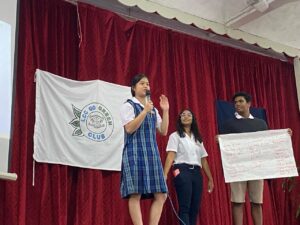
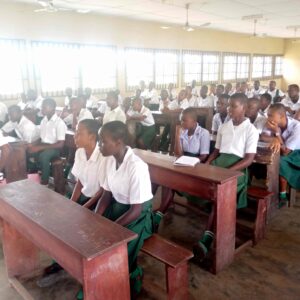
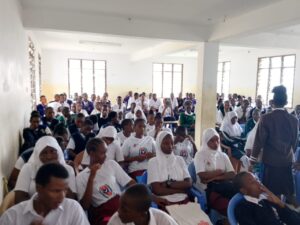
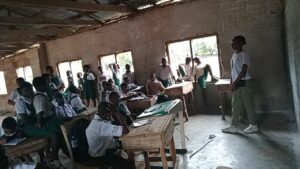
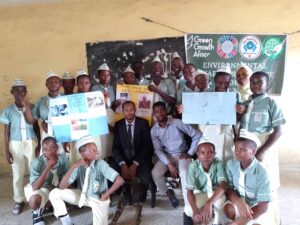
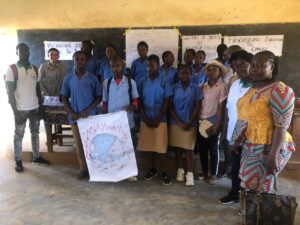
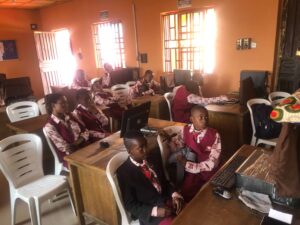
The 2024 Worldwide Teach-in on Climate and Justice by Green Growth Africa in collaboration with Bard College (USA), recently concluded with remarkable success. Designed to empower African youths, especially secondary school students, the event aimed to equip them with the skills, knowledge, and action competencies needed to tackle climate change.
Engaging Learning Experiences
The Event embraced a holistic approach, incorporating learner-centered inquiries and peer-to-peer learning that align with the ultimate goal of the UNFCCC – Preventing “dangerous” human interference with the climate system. Beyond traditional learning, students participated in teams and engaged in extracurricular activities like debates, poems, science exhibitions, quizzes, and creative arts—all centered around the theme of Climate Change and Climate Justice. These activities not only fostered creativity but also honed essential skills such as teamwork, research, communication, and leadership.
Continental Participation
The call for expression of interest resonated across Africa, with 72 secondary schools from 22 countries expressing interest. After a meticulous selection process, ten (10) outstanding schools from seven African countries—Nigeria, Kenya, Zambia, Tanzania, Democratic Republic of Congo, Mauritius, and Cameroon—were shortlisted to host the event.
Diverse Activities and Learning
With 1,115 participants, including students, staff and non-staff members, the event lasted 22 hours and 45 minutes, featuring 39 breakout sessions. Activities varied from tree planting, drama presentations, storytelling, and dance performances to local language integration and career talks. These diverse activities enriched the learning experience and engaged participants on multiple levels.
Local African Languages
The decision to incorporate local African languages in the World Wide Teach-in on Climate and Justice Event was a thoughtful and strategic approach. Given that a considerable number of African countries have their local languages as their first language, with other countries not fluent in English. The decision to use local languages like Igbo, Yoruba, Hausa, Swahili, Mbala, and Creole was a strategy that ensured inclusivity and understanding.
This allowed students to discuss the causes, effects, and solutions of climate change in languages familiar to the local communities. As a result, it made the information more accessible and comprehensible to non-English speakers.
By embracing local languages, the event promoted a deeper understanding of climate change and demonstrated respect and value for the cultural diversity of Africa. 6 local African languages were incorporated as part of the Teach-in Event – Igbo, Yoruba, and Hausa (Nigerian languages), Creole (Mauritius), Mbala (Zambia), and Swahili (Tanzania).
This approach fostered better engagement and encouraged more meaningful conversations on climate issues within the communities.
Gender Inclusion and female participation
In line with Green Growth Africa’s non-discriminatory policy to promote gender equality, female participation and inclusion, the Event encouraged equal participation of both genders. This also holds true for the participation of coordinating teachers. In fact, Green Growth Africa is conscientiously following a pattern where the percentage of females – students and coordinating teachers – participating in the programme remains constant at 50%, and this was achieved at the just concluded events across various African Secondary Schools
Empowering Future Leaders
By the end of the event, students had a comprehensive understanding of climate change, its causes, effects, and potential solutions. They also gained insights into climate protection careers and were inspired to act in their schools and communities. The event’s outcomes perfectly aligned with its objectives, making it a resounding success in empowering the next generation of African leaders to address the pressing challenges of climate change.