
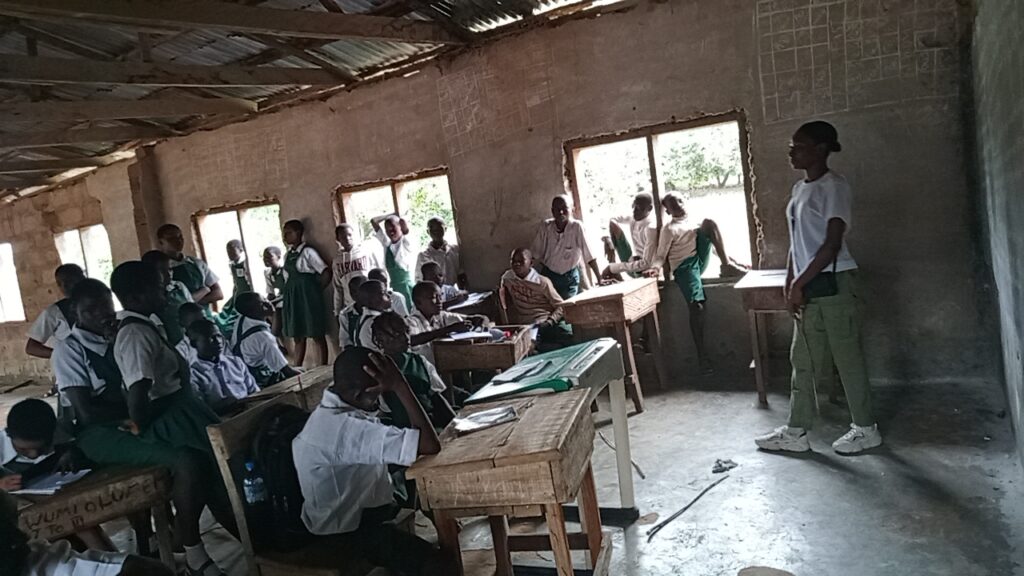
Community High School in Takete Isao, Kogi State, Nigeria, recently hosted an enlightening in-person teach-in event focused on climate change education. With 36 enthusiastic participants engaged in two breakout sessions, the event highlighted the importance of introducing climate change education into the local curriculum and empowering students to become climate-conscious citizens.
Introducing Climate Change Education
For many students, the concept of climate change was entirely new. Through intensive learning and training, students gained a comprehensive understanding of climate change, its causes, and the role of human activities, such as tree cutting and littering, in exacerbating the problem.

Future Career Plans Aligned with Climate Action
During the first breakout session, students shared their future career aspirations and how they plan to address the climate crisis in their chosen fields. From doctors to pilots, fashion designers, lawyers, students expressed their commitment to integrating climate-conscious practices into their professions.
Some of their aspirations were:
‘’As a doctor, I will learn about how climate and environment can affect people’s health and use this knowledge in my work. I will also work with other health care workers to address the multiple health consequences of environmental degradation, extreme weather events and other climate related threats.’’
‘’As a pilot, I will promote using sustainable aviation fuels made from non-food crops to cut fossil fuel use, lower carbon footprints and reduce greenhouse gas emissions.’’
‘’As a fashion designer, I will focus on sustainable fashion by creating eco-friendly designs that reduce waste, use sustainable materials and prioritize ethical production.’’
‘’As an architect, I will design energy-efficient buildings using sustainable materials like recycled ones, and by incorporating energy-saving techniques such as solar panels and geothermal systems.’’
‘As a musician, I will use my talents to write songs about nature that inspire people to take action on climate change.’’
‘’As a lawyer, I will work with government and NGOs to create new laws promoting sustainability like carbon pricing.’’
Communicating Climate Change in Local Languages
In the second breakout session, students learned to communicate about climate change in their local language – Yoruba. They discussed the causes, effects, and solutions of climate change, emphasizing the need for collective action and individual responsibility.
Conclusion: Fostering Climate Consciousness
Community High School’s teach-in event served as a pivotal moment in introducing climate change education to its students. By equipping them with knowledge and inspiring them to act, the school is nurturing a new generation of environmentally conscious leaders ready to tackle climate change challenges in their community and beyond.
