
Imagine a young farmer in Kenya who depends on seasonal rains to grow maize. In recent years, the rains have come late, sometimes not at all, leaving fields dry and families without income. At the same time, nearby cities are expanding quickly, demanding more food, water, and energy. This tension captures Africa’s central challenge: how can economies grow without exhausting the very land, water, and climate that people rely on?
The stakes are high. Climate extremes and environmental degradation already cost African economies up to 5% of GDP each year—about US$68 billion (Africanews, 2024). Yet the continent’s natural capital—its forests, soils, waterways, and stable climate—remains the foundation of prosperity.
This is where green growth comes in. At its core, green growth means expanding economies while protecting, and even restoring, these natural assets. In practice, it’s about policies and investments that decouple economic activity from greenhouse-gas emissions and resource depletion, while creating decent jobs and resilient communities. The concept rose to international prominence in the mid-2000s—most notably through the “Seoul” Green Growth initiative—and has since been taken up by the OECD, UN agencies, and development banks as a pragmatic route to sustainable development.
The African Context
Africa is often described as the “green growth frontier.” With abundant sunshine, powerful winds, fertile lands, and immense geothermal reserves along the Rift Valley, the continent holds some of the world’s richest renewable resources. Already, solar projects are multiplying, and mini-grids in Kenya and Nigeria have transformed rural households: in one recent study, the median income of rural Kenyan communities quadrupled after gaining access to solar power, along with improvements in health, productivity, and gender equality.
But turning that potential into shared benefit faces big obstacles. Africa currently faces an annual infrastructure financing gap of about US$170 billion, and in total needs over US$400 billion per year to fund its structural transformation, especially in transport (≈ 73%), education, and energy (AfDB, 2024). On the skills front, the gaps are also stark: in Nigeria, for example, the government estimates that it has only about 50% of the skilled workforce required in the power and renewables sector.
Yet there are bright signs on the horizon. A new report forecasts up to 3.3 million direct green jobs by 2030, especially in renewable energy (with solar alone contributing nearly 1.7 million), agriculture and nature-based sectors, construction, and manufacturing. Unlocking this potential will require targeted policies that attract investors, innovative financing that de-risks projects for local players, and large-scale investment in skills and training so that these jobs are filled by Africans themselves. In short, Africa’s path to green growth is not just about technology or capital—it is about enabling its people to lead and benefit from the transition.
How Green Growth Connects to the SDGs
Green growth is not a separate agenda; it’s an engine for many SDGs. By steering investment into renewable energy, sustainable agriculture, circular industry and resilient cities, green growth helps deliver decent work and economic growth (SDG 8), affordable clean energy (SDG 7), climate action (SDG 13), responsible consumption and production (SDG 12) and life on land (SDG 15). International programmes (UN PAGE, UN DESA, others) explicitly promote green economy approaches as tools for meeting the 2030 goals.
Examples of Green Growth Initiatives in Africa
- Case Study 1: EcoHeroes Initiative – Youth Driving Green Growth
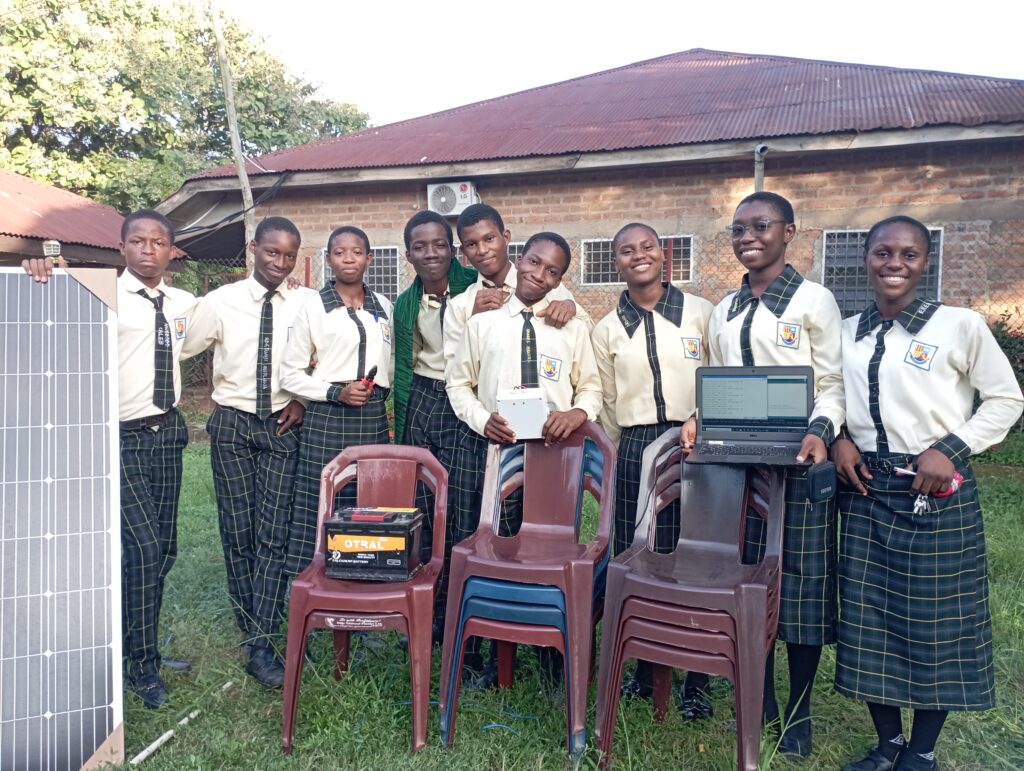
The EcoHeroes Initiative (formerly the Environmental Education Programme, EEP) of Green Growth Africa shows how green growth principles can be translated into practice at the community level. The programme works with secondary school students across Africa, equipping them with the skills to identify local environmental challenges and design solutions that are practical, replicable, and sustainable. Each team receives small grants, expert mentorship, and opportunities to share their results locally and internationally.
The outcomes demonstrate how environmental challenges can be turned into opportunities for innovation and skills development. For example:
- In Nigeria, students produced solar-powered reading lamps, reducing reliance on kerosene lighting.
- In Kenya, a team converted sugarcane waste into affordable sanitary pads, addressing both waste and women’s health.
- In Ghana, students created smokeless briquettes from rice husks and groundnut shells, offering a cleaner alternative to charcoal.
- In Rwanda, a school constructed a 3,500-litre water tank from 1,500 plastic bottles, addressing water scarcity while reusing waste.
- In South Africa, students propagated drought-resistant indigenous plants for carbon capture and ecosystem restoration.
By the end of each cycle, project teams transition into permanent EcoHeroes clubs within their schools, sustaining the impact and mentoring new cohorts of students. With over 8,000 students and 2,400 teachers from 18 countries already engaged, the initiative is building a pipeline of young Africans equipped with practical experience and a lifelong commitment to sustainability.
EcoHeroes Initiative illustrates how targeted investment in education and innovation can deliver the “triple dividend” of green growth: addressing environmental problems, building skills for green jobs, and strengthening community resilience.
- Case Study 2: Green Building in Ibadan – Turning Waste into Resource
The cement industry accounts for 6–8% of global CO₂ emissions (around 2.4 billion tonnes annually). Replacing cement with sand-filled plastic bottles offers a low-cost, low-carbon alternative that also reduces plastic pollution. Bottle bricks are twice as strong as conventional sandcrete blocks, resistant to fire and earthquakes, and can cut building costs by up to 50%.
In 2024, Green Growth Africa constructed Nigeria’s first ultramodern green building from 27,333 plastic bottles in Lagbeja-Akingbile, Ibadan. The building is powered entirely by off-grid solar and was completed in just two months, demonstrating that green construction can be both efficient and scalable.
The project went beyond construction. Streets in the community were renamed after sustainability themes, solar streetlights were installed, and residents were engaged in awareness sessions with partners including the World Wide Fund for Nature (WWF). These efforts encouraged lasting changes such as improved waste management and community-built drainage systems.

The Ibadan green building shows how practical innovation can cut emissions, reduce waste, and engage communities — a clear example of green growth in action.
- Case Study 3: Noor Solar Complex, Morocco – Scaling Renewable Power
The Noor Solar Complex at Ouarzazate, Morocco, is one of the world’s largest concentrated solar power (CSP) plants and a flagship renewable energy project in Africa. When fully completed, the complex is expected to generate around 580 MW, enough to power more than one million homes (Power Technology). It forms a central part of Morocco’s target to source 52% of its electricity from renewables by 2030 (Climate Investment Funds).
Noor demonstrates how concentrated public investment and international partnerships can drive large-scale renewable deployment. Backed by the Moroccan Agency for Sustainable Energy (MASEN), and supported by financing from the World Bank, African Development Bank, and European partners, the project has reduced Morocco’s dependence on imported fossil fuels while building local technical capacity (World Bank / AfDB).
Beyond power generation, Noor has helped establish Morocco as a leader in solar expertise, with potential to export both electricity and technical know-how to other African markets. It also shows how renewable megaprojects can spur new industries, from manufacturing components to operation and maintenance services, creating jobs and building a skills base for the green economy.
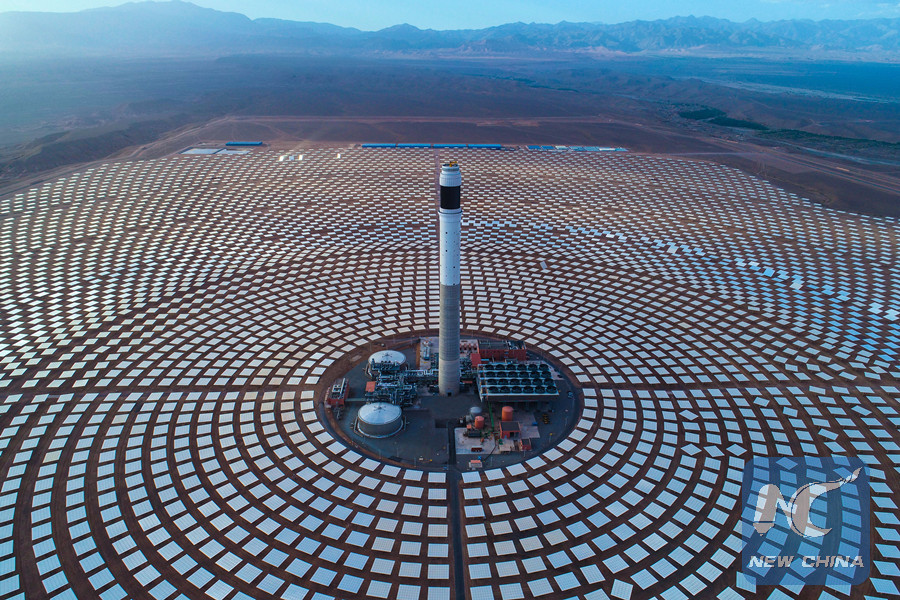
The Ouarzazate complex highlights the role of policy ambition, blended finance, and infrastructure investment in delivering green growth at scale — complementing smaller community-led initiatives across the continent.
Conclusion: Why Green Growth Matters for Africa’s Future
Green growth offers a rare alignment of three urgent African priorities: delivering jobs for a youthful workforce, expanding energy and infrastructure access affordably, and buffering economies against climate shocks that disproportionately hit weather-dependent livelihoods.
Finally, the global capital landscape is increasingly favouring climate-aligned investments; countries and organisations that build the right policy and skills frameworks will attract finance and markets. Hence, the prize for mainstreaming green growth is both economic resilience and a stake in the 21st-century low-carbon economy.
Written by Paul Dickson, Community Manager, Green Growth Africa
Edited by Precious Oparanozie; Manager, Communications, Engagements & Partnerships; Green Growth Africa

