
According to waste management data, over 17 million of plastic wastes are generated in sub-Saharan Africa annually and only about 10% is recycled. In Rwanda, single-use plastics like plastic bags and bottles have led to flooding and reduced agricultural productivity, hindering rainwater penetration into the soil. Additionally, plastic bottles, taking years to degrade, contribute to air pollution when burned and are not biodegradable, emitting greenhouse gas and causing harm to the environment. These effects lead to change in the climatic conditions in Rwanda, where they experience more rainfall than usual, soil erosion, reduced agricultural productivity and lack of water. The student team at Etefop TSS Saint Lwanga school saw this environmental challenge and decided to come up with a solution to solve this need.
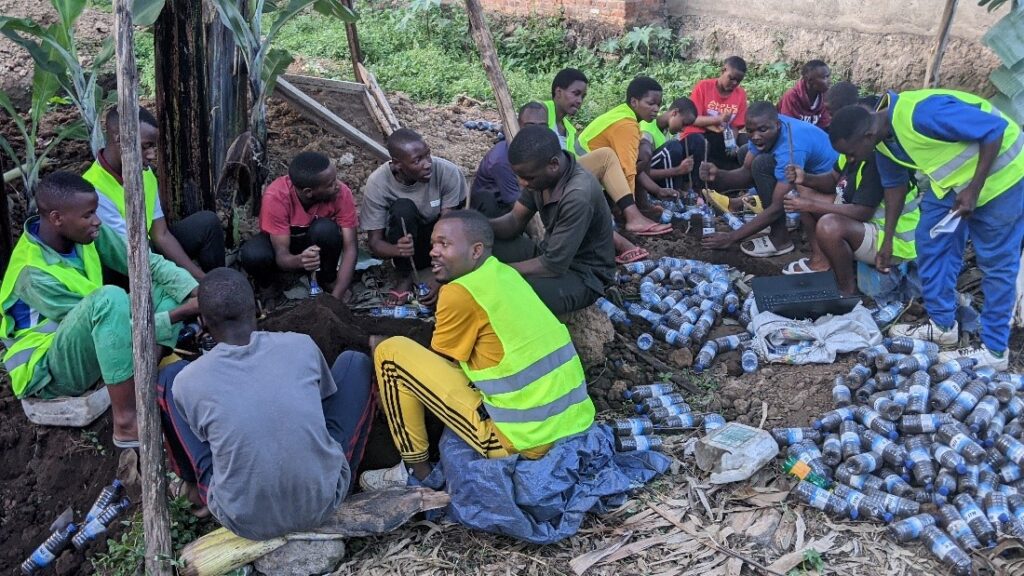
Thus, through the technical and funding support of Green Growth Africa in partnership with Pratt and Whitney, and the North American Association for Environmental Education (NAAEE), the 18-student team of Etefop TSS Saint Charles Lwanga are undertaking the project of constructing a 3.5litres green water tank from recycled plastic waste bottles. Their project, “Construction of a Green Tank for Environment Protection,” aimed at promoting eco-friendly community and combating plastic pollution addresses the global issue of plastic waste, which poses severe threats to the environment and marine life.
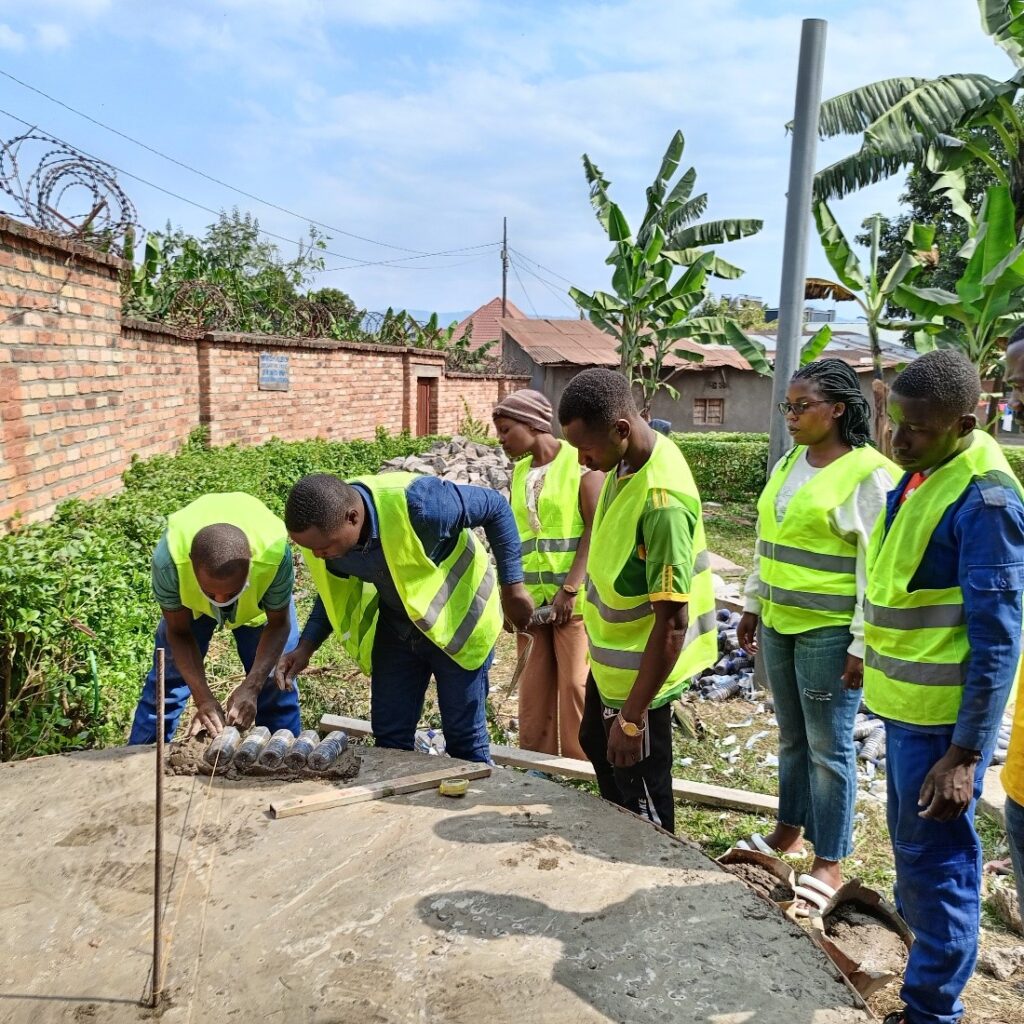
The Green Tank project’s genius lies in using 1581 plastic bottles as eco-bricks for constructing a water tank dedicated to rainwater harvesting. These eco-bricks are filled with sand or soil, joined together with a strong rope, and cemented to create a water tank. The advantages of this approach are noteworthy:
- Environmental Benefits: By reusing plastic bottles and eliminating the need for brickmaking, the project contributes to waste reduction and greenhouse gas emission.
- Waste Management Solution: Plastic bottles, otherwise destined for landfills, are repurposed to construct water tanks, addressing the issue of plastic waste disposal.
- Cost-Effectiveness: Eco-bricks offer a sustainable and affordable alternative to conventional bricks, reducing the project’s environmental impact.
ETEFOP’s Green Tank project has made remarkable progress, with students actively engaged in a mobilization event about climate change and the project’s objectives. Construction is underway, and the eco-friendly water tanks will soon be a reality.

This innovative endeavor sets an example for other communities to follow, showcasing how sustainable practices can combat plastic pollution and protect our planet. By supporting projects like the Green Tank initiative, we can work together to build a cleaner, greener future for generations to come. Let’s join hands and make a positive impact on the environment, one eco-brick at a time.
Report by: Jean Jacques Sourvenir
Blog developed by: Rejoice Asubiojo

