
The frequency and intensity of climate related shocks are calling for high level strategies that have the potential to deescalate the impacts of climate shocks, just as fast as the shocks are escalating. Climate action, particularly through promoting youths engagement in climate issues is undoubtedly a win-win strategy for achieving both economic development and environmental sustainability.
Young people, especially in this 21st century, have the consciousness that they are at the front lines of disaster events and climate change threats. With their grit, strength and highly spiritedness, youths can actively advocate for environmental protection and uphold the principles of sustainability.
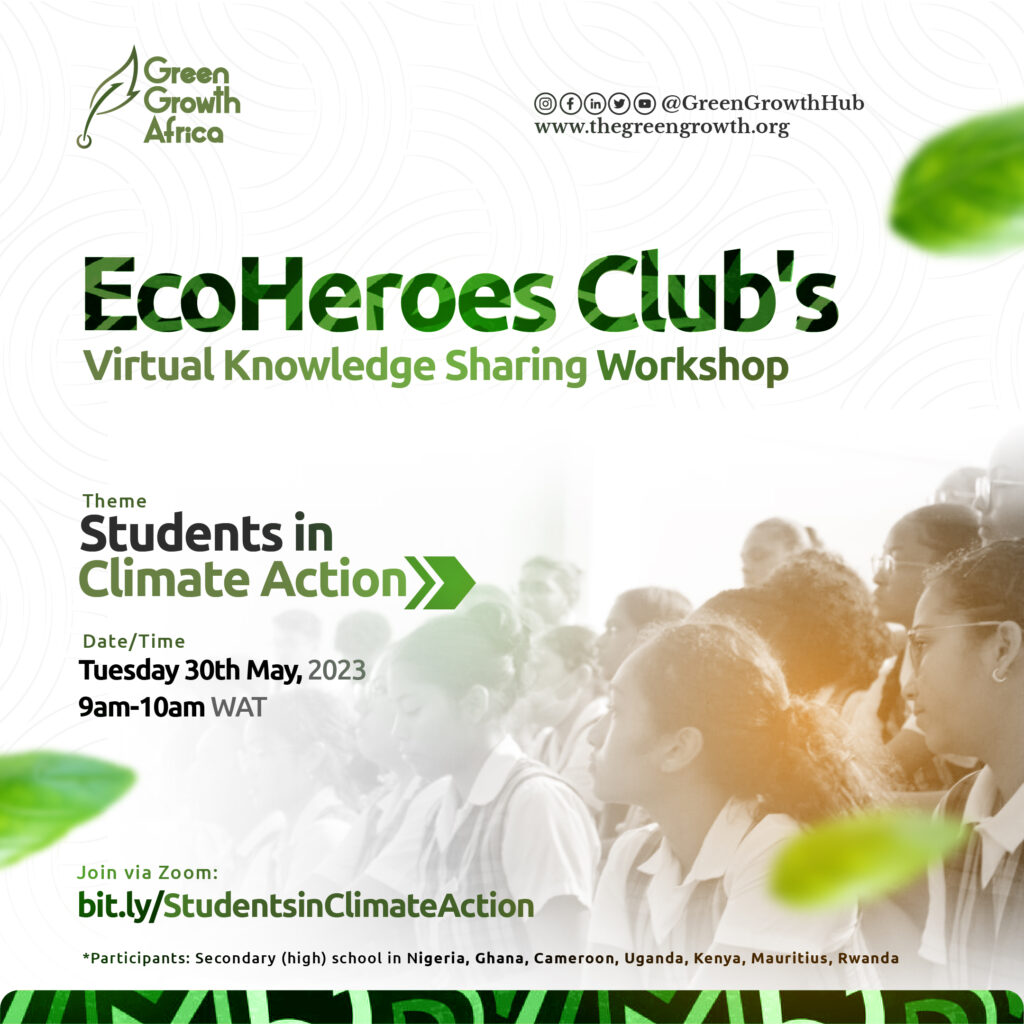
On Tuesday May 30, 2023 Green Growth Africa, through its EcoHeroes Initiative, hosted over 7 secondary (high) schools across Nigeria, Mauritius, Kenya, Uganda and Rwanda in a virtual knowledge sharing workshop, themed “Students in Climate Action.” The virtual workshop builds up on the successes of the Worldwide Teach-in on Climate and Justice events organized by Green Growth Africa in partnership with Bard College (USA) and University of Waterloo (Canada).
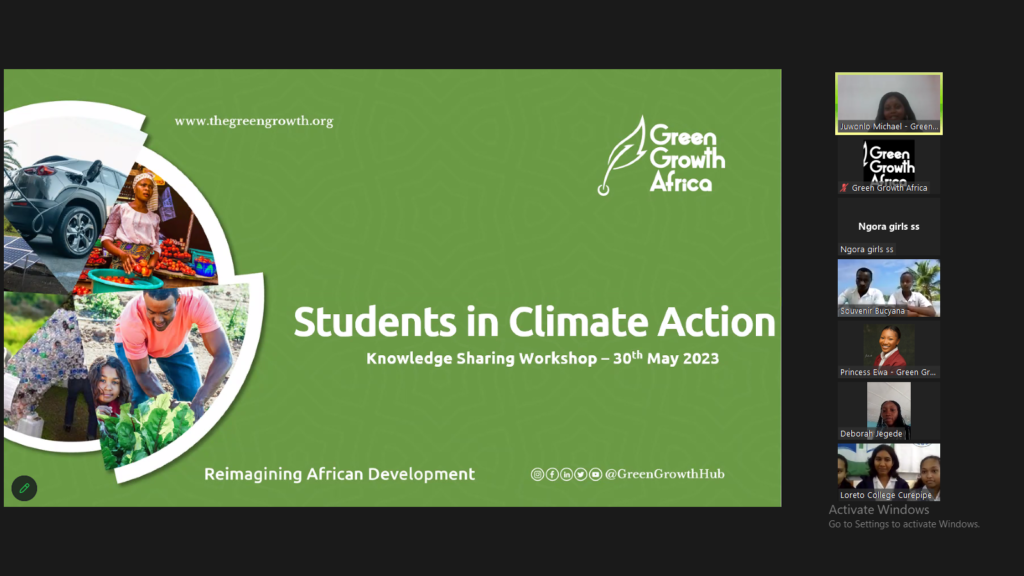
The 1 hour virtual workshop, which was intended to foster the students’ interest in climate action through peer-to-peer learning, was an open discussion for the students to interact, share ideas and brainstorm on climate change issues: it’s meaning, causes, effects, solutions, careers and actions to solve climate change.
With about 150 participants (138 students, 8 teachers and 4 members of the public), the discussion forum allowed each school to provide 2 student-representatives (maximum of 3) to represent their entire student population in the discussion forum. Each student-representative was to speak on selected topics relating to climate change.
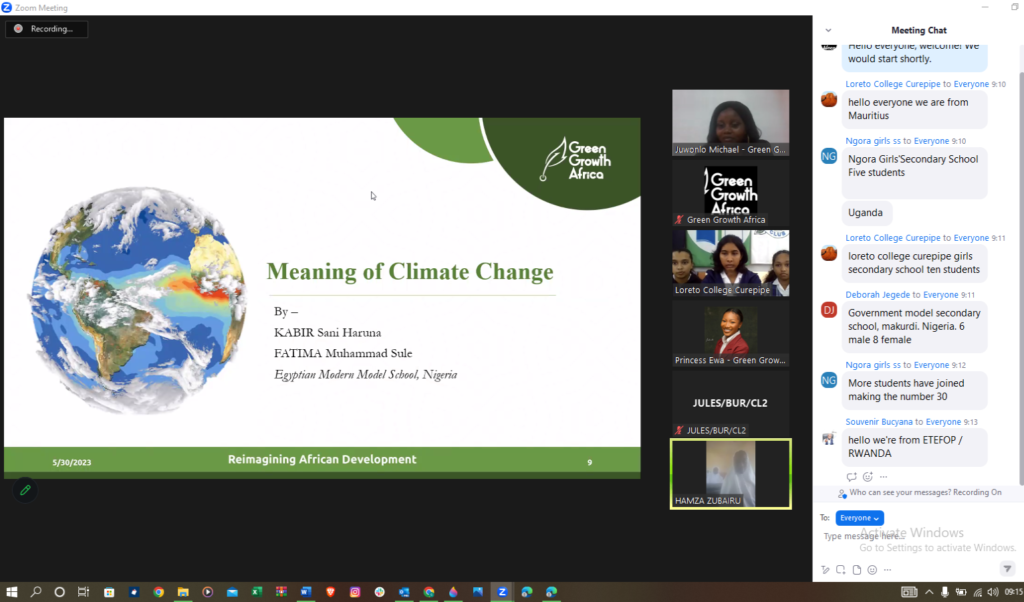
Speaking on the meaning of climate change, the students of Ngora Girls High School Uganda shared their insights on the meaning of climate change. The students noted that climate change is the long-term shift in temperature and weather pattern, and it can be caused by cutting down of trees without any replacements and industrialization.

According to Ochola Maureen and Atieno Pheny of Kaimosi Girls High School, Kenya, they stated that the causes of climate change, especially at the global level includes emission of harmful gases, cutting down of trees, use of fossil fuel, air pollution, oil spillages in water bodies, deforestation.

Notably, Ubenyi Edeh Joel and Nwoye Mary of Government Model Secondary School, Nigeria and Iradukunda Kenia and Nsengimana Egide of Etefop Tvet School, Rwanda presented on the Effects of Climate Change. Accordingly, they noted that global warming, droughts, flooding, wild fires, hurricane, erosion, increased health risks, depleting the ozone layer, loss of species are major effects of climate change.
“In Rwanda, the rains have become shorter, yet intense and this causes major disaster events like flooding, and leads to destruction of properties, loss of lives, food shortages, loss of species, amongst others. The problem of flood is quite intense in northern and western provinces of Rwanda where volcanoes are located. Additionally, Rwanda often experiences drought, especially in the eastern and southern provinces, and this leads to food shortages due to the fact that the plantations are destroyed.” – Iradukunda Kenia (student, Etefop Tvet School, Rwanda).
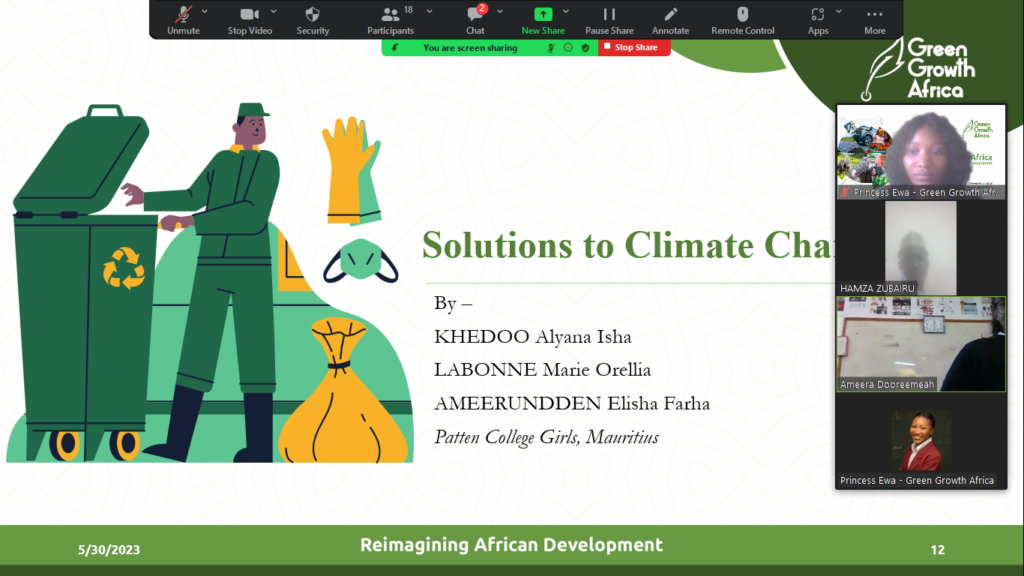
Additionally, Khedoo Alyana Isha and Ameerundden Elisha Farha of Patten College Girls, Mauritius spoke up next on the solutions to climate change. They gave an overview of the climate event held in their school, from the planning phase to the event day. They noted that renewable means of producing electricity, recycling of plastic bottles, and reduction of food wastes were some common ways of solving climate change problems. A noteworthy innovation of the students aimed at solving climate change problems included the upcycling of old t-shirts into making cloth bags and recycling of plastic bottles to make clothes.
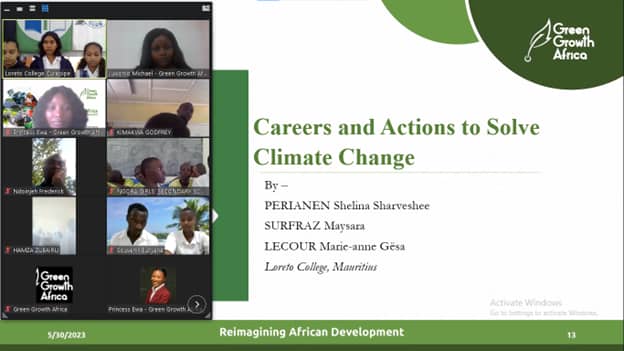
In the last session of the discussion forum, Perianen Shelina Sharveshee, Surfraz Maysara and Lecour Marie-anne Gësa of Loreto College, Mauritius discussed on the careers and actions to solve climate change. According to the students, climate scientists and engineers were major careers in solving climate change threats.
“Environmental and Mechanical engineers have a lot in developing and finding solutions to fight climate change among many other jobs. Companies not specialized in any environmental movement can also help. We should encourage big companies to reduce the carbon footprint their company produces by simply planting trees and donating to green energy projects. They could also opt for green business travel such as traveling by train for shorter journeys or even carpooling. These companies should also create a climate conscious workplace structure which will instill an ecofriendly mindset in the employees. These actions should be encouraged in all companies especially big ones as awareness will reach more people in this way. Pushing further, influencers, famous people and even big political figures also help a lot. Them speaking about climate change will instill people to help through their huge fan following and involvement. Big companies should seek out these influential people to work together sustainably for a change.” – Surfraz Maysara (student, Loreto College, Mauritius).
“Climate change is a global problem that requires immediate action from government, businesses and individuals. The effects of climate change are already felt around the world, including rising sea levels, more frequent natural disasters and changes in weather patterns. According to the UN, temperature and sea level in Mauritius are rising at a faster rate, and the country is also facing accelerated coastal erosion and coral bleaching. In addition, in Mauritius for the first time, a meteorological station forecast that the temperature will be falling to 16 degrees during the winter which is a drastic consequence of climate change in a tropical island like ours. To stop climate change, we need to take actions on multiple fronts including reducing green house gas emission, promoting renewable energy, adapting to the impact of climate change. One of the most effective ways to stop climate change is to reduce green house emissions. This can be done by transitioning away from fossil fuel and tilt towards renewable energy sources such as green, solar and geothermal energy. Government can promote this transition by implementing policies that incentivize the use of renewable energy and penalize the use of fossil fuel. Recently, the Mauritian government has removed the taxes on electric cars in order to reduce the use of fuel and encourage green, renewable alternatives. Businesses can also play a role by investing in renewable energy and reducing their carbon footprints through energy efficient practices. Finally, education and awareness raising is essential for stopping climate change. People need to understand the causes and impacts of climate change and the actions they can take to reduce their carbon footprints.” – Lecour Marie-anne Gësa (student, Loreto College, Mauritius).

Overall, the workshop was insightful, educational and fun. The students’ enthusiasm and brilliant presentations was indeed remarkable.

