
– Visit showcases Nigeria’s first ultramodern plastic-bottle building and marks a partnership to advance circular agriculture.
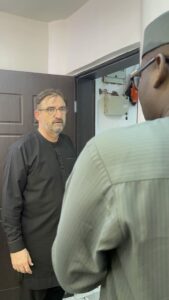
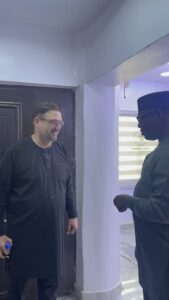
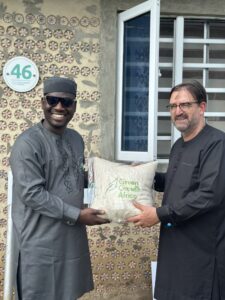
On the 24th of September, Green Growth Africa welcomed His Excellency Daniel Krull, Consul General of Germany in Lagos, to its Green Growth Hub in Ibadan. The visit brought into focus; the Hub’s use of waste plastic bottles as an alternative building material and the signing of a partnership agreement to implement the Circular Agriculture Project (CAP) in Ibadan. Together, these developments underscore the growing collaboration between Nigeria and Germany in advancing circular economy solutions, sustainable agriculture and climate action.
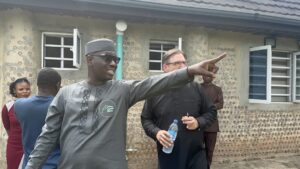
The Consul General was received by Dr Adedoyin Adeleke, Executive Director of Green Growth Africa, who led the delegation on a tour of the organisation’s facilities at the Green Growth Hub in Lagbeja-Akingbile, Ibadan. The engagement included a walkthrough of the Hub’s infrastructure, with the plastic-bottle building serving as a central highlight.
A Building That Demonstrates Circularity in Practice
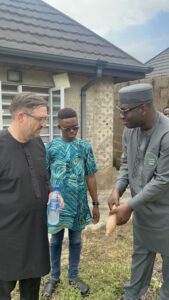
At the centre of the tour was Nigeria’s first ultramodern building developed from waste plastic bottles in place of conventional sandcrete bricks. The building was constructed using 27,333 discarded plastic bottles, carefully upcycled into bottle-bricks. By using these bottles as an alternative construction material, the facility demonstrates how waste that would otherwise contribute to environmental pollution can be repurpose as a functional infrastructure. During the visit, the Consul General was shown remnants of the bottles used in the construction, offering a tangible illustration of the transformation from waste material to building resource.
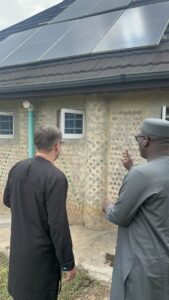
The Hub’s sustainability features extend beyond its construction. The facility is powered entirely by an off-grid solar photovoltaic system, reducing reliance on grid electricity and diesel generators. It also features a fully automated borehole water system provides reliable supply of clean water for the operations of the facility. Together, these features reinforce the concept of the Hub as a demonstration of green growth for integrated development approach – integrating waste recovery and renewable energy into infrastructural development.
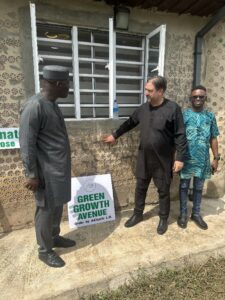
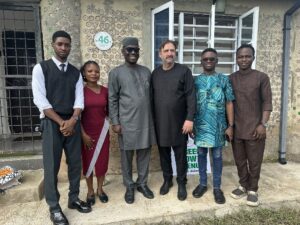
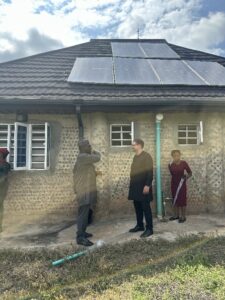
Moreover, the visit also marked the signing of a partnership agreement between Green Growth Africa and the German Government (through the German Consulate in Lagos) to implement the Circular Agriculture Project (CAP). The choice of Green Growth Hub as the venue for the signing and siting of the project is significant. In addition to providing a setting for the diplomatic engagement, the building embodies the very principles that underpin the Circular Agriculture Project: rethinking conventional production systems, maximising the value of available resources and demonstrating how sustainability can be operationalized.
Advancing Circular Agriculture Through Integrated Innovation
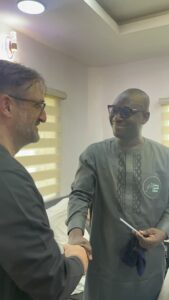
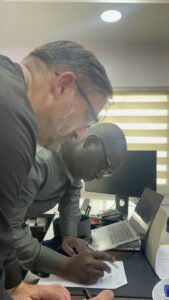
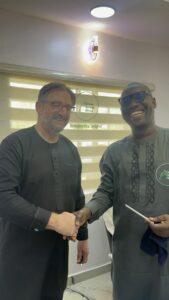
The Circular Agriculture Project represents the next phase of Green Growth Africa’s vision for sector decarbonization and circular economy in Nigeria, extending the application of circular economy principles into agricultural production. Designed as a five-component integrated farming model, CAP will seamlessly integrate poultry production, Black Soldier Fly (BSF) farming, fishery, aquatic plant (duckweed) cultivation and vegetable production into a single, solar-powered, closed-loop system.
At the centre of the model is the circularity concept that waste generated in one unit of the integrated farm will serve as a valuable input for another. Poultry droppings, for instance, will be processed through the Black Soldier Fly unit to produce protein-rich larvae for animal feed and frass for use as organic fertiliser. Nutrient-rich wastewater from the fishponds will be reused for crop irrigation, while duckweed cultivated on the ponds will help recover nutrients for reuse as poultry feed. Vegetable residues will also be channelled back into the poultry production system.
By connecting these five components, the project seeks to reduce agricultural waste, minimise dependence on external inputs, improve resource efficiency and lower the environmental footprint of food production. Its reliance on solar energy will further reduce dependence on grid electricity and diesel generators, further lowering operational costs and associated emissions.
Situated in Lagbeja-Akingbile, Ibadan; in proximity to the International Institute of Tropical Agriculture (IITA) and the University of Ibadan, the project is strategically positioned to create opportunities for research, learning and collaboration with academic and agricultural institutions.
Innovation That Serves Community
Beyond its production objectives, the Circular Agriculture Project is conceived as a scalable demonstration and learning platform for sustainable agriculture. It will provide opportunities for smallholder farmers and students to engage with integrated farming techniques through demonstrations, training and research activities.
The initiative is also expected to contribute to local economic opportunities through direct and indirect employment across its value chain.
Through the partnership with the German Government, Green Growth Africa is strengthening efforts to advance solutions that connect environmental sustainability with food production, community development and economic opportunity.
As implementation of the Circular Agriculture Project progresses, Green Growth Africa looks forward to building on this partnership to demonstrate how circular solutions can contribute to more resilient agricultural systems, environmental sustainability and inclusive green growth in Nigeria.
About Green Growth Africa
Green Growth Africa is a UNEP-accredited non-governmental organisation that is committed to innovation, development and implementation of ‘greened’ socio-economic development solutions to address Africa’s development challenges. Green Growth Africa is committed to sector decarbonisation and nature-based solutions to facilitates just and green transition in Africa. Through several initiatives for Sector Decarbonisation, Education for Sustainable Development (ESD), Research, Digital and Green Transition (ICT), Policy Analysis and Engagement, Development, Policy & Strategic Communications, among other initiative that has resulted in several award-winning innovations with impact in 22 African countries.
Media Enquiries:
Oluwatoni Ogunbanjo
Email: oluwatoni@thegreengrowth.org
Website: https://thegreengrowth.org/

