
Have you noticed that over the years, December through January used to be a season for harmattan, when we shivered under blankets, but it has now turned into a season for sauna sessions. The cause? Climate change. And while all this is happening, Africa sits on a treasure trove of energy, such as sunshine and wind, that could be used to produce power that reduces carbon emissions and mitigates the effects of climate change. But sadly, it still depends heavily on power grids for energy, and even at that, in some of its countries, like Nigeria, we still hear, “NEPA has taken light.”
This is what happens when natural resources are abundant but a deficit in strategy.
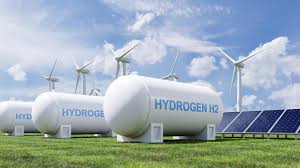
For decades, Africa has had the resources, but not always the systems to turn those resources into reliable and sustainable power. Today, green hydrogen offers a chance to change that narrative entirely in a shift that could power industries, strengthen communities, and even economies.
Simply put, “green” or “clean” hydrogen is hydrogen produced using renewable energy sources like solar and wind. These clean energy sources are used to split water into hydrogen and oxygen through a process known as electrolysis. No fossil fuels, therefore, no carbon emissions.
Now, imagine this for a moment. Factories across Africa are running on fuel made from sunlight. Planes flying with near-zero emissions. Farms and remote communities powered by clean, locally produced energy, no longer waiting for grid connections, but generating and sharing power on their own terms. All this can take shape when green hydrogen sits right at the center of it. Not long ago, a company called ZeroAvia successfully flew a 20-seater aircraft powered by a hydrogen fuel cell engine. For the aviation sector, that moment mattered. It showed that even the hardest industries to decarbonize have a realistic path forward.
Africa is very rich in solar and wind resources. There’s a short story that tells a very clear difference; one of missed opportunity, and one of great potential. Firstly, the continent holds nearly 60 percent of the world’s best solar potential, but secondly, and sadly, it contributes just about 1 percent to global solar generation capacity, clearly painting the picture of underutilization of great potential in the continent.
Green hydrogen depends on renewable electricity, which means large-scale solar and wind deployment is not optional; it is the foundation itself, and to make green hydrogen feasible, Africa must first scale what it already has in abundance: sunlight and wind, solar farms and wind turbines. Countries like Morocco, Kenya, and Tanzania have projects that could drive green hydrogen production. Morocco’s Noor Ouarzazate Solar Complex stands as one of the largest solar projects in the world, positioning the country as a leader in solar energy production. In Kenya, the Lake Turkana Wind Power Project now supplies about 17 percent of the country’s installed electricity capacity. In Senegal, the Taiba N’diaye wind farm has boosted national capacity by roughly 15 percent. If these are properly harnessed for green hydrogen production, the power generation would cut down on emissions, strengthen energy security, and power Africa’s industries beyond the limits of the grid. That shift matters because investments in renewables will do more than generate electricity. They will create jobs, attract capital, and lay the groundwork for green hydrogen production. In this sense, green hydrogen is not just an end goal; it can act as a catalyst, accelerating Africa’s economy.
Africa isn’t short of energy. The sun shines, the wind blows, and there are built projects that could make green hydrogen production possible, and keep factories running, planes flying, and homes lit. The challenge has always been making it work for people, industries, and communities. If governments, investors, and innovators act now, green hydrogen could help Africa finally turn its energy potential into real leadership in the clean energy world.
Written by Glory Akenu, Communications Associate.

