
There has been a tremendous increase in plastic production and consumption over the last few decades. According to a global report by the United Nations Environment Programme, one million plastic drinking bottles are purchased every minute, while 500 billion single-use plastic bags are used worldwide every year.
Plastics are non-biodegradable; thus, without proper plastic waste management strategies, promoting circular economy consumption, or through the development of other eco-friendly alternatives, plastics pose great threats to the environment.
In Kenya, developmental strategies are already being implemented to reduce plastic pollution, and it’s near-irrevocable effects on both people and the environment.
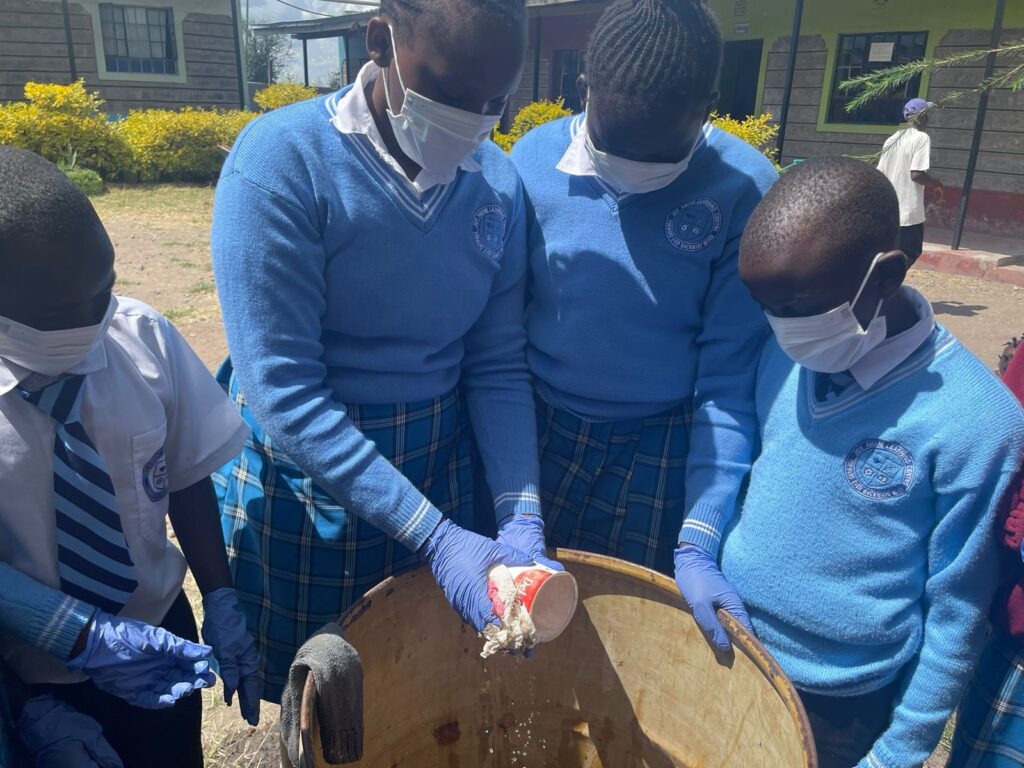
In consonance with the above, Green Growth Africa in partnership with Pratt and Whitney, and the North American Association for Environmental Education (NAAEE), provides both technical and funding support to a 5-student team at Joy Amani Learning Centre, Kenya to their solution of recycling plastic waste materials into durable and eco-friendly plastic poles for use in applications ranging from fencing to landscaping.

The project requires collecting, washing, sorting, and melting down of the plastic waste materials to turn them into plastic fencing poles.
This exceptional innovation recycles 20kg of thermo plastic waste into a singular plastic fencing pole, which is 7 ft long and 4 ft in diameter.
The upside of this project is that it is easier to make, sustainable, highly durable than conventional cement block fencing, amongst others. Overall, the project will contribute to reducing plastic pollution, and climate change in Kenya.
Report by: Evans Mose
Blog developed by: Princess Ewa

