
On Green Growth TV, the National President, Association of Waste Management in Nigeria, Mr Olugbenga Adebola, unpacks why Nigeria is still struggling with waste, and how much our waste truly leads to wealth.
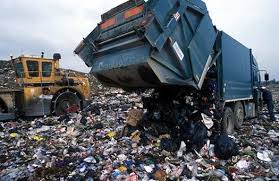
Sometimes, it takes stepping back to realise that what we call “waste” is only wasted when we choose not to use it. That’s the tone this episode of The Circle sets from the very beginning, when host Toni Ogunbanjo sits with Mr Olugbenga Adebola for a deeper look into the rising conversation that Nigeria’s waste can truly become wealth.
Nigeria generates so much waste every year, but only a tiny fraction gets recycled or reused. The rest ends up in open dumps, waterways, or is burned in the open air, harming people and the environment. With statistics showing that Nigeria’s circular economy will add about 10 billion to the GDP by 2030, questions still arise as to what stands between us as a country, achieving those numbers and seeing real progress.
Mr Olugbenga explains that while circular economy conversations are growing globally, Nigeria and most of Africa are still at the starting line. He goes further to express that perhaps we haven’t even started at all as a continent, and the mindset is the first hurdle. Too many people, from households to government agencies, still see waste as something to throw away, not something to recover. Lagos is making progress with the circular economy, but nationwide, the whole system remains weak.
This is where the barriers start stacking up: policy instability that scares away investors, public attitudes that lead to mixed and contaminated waste, and funding challenges that make it nearly impossible for the sector to grow. In an industry that needs 15 to 25 years of financing, Nigerian businesses are being offered short-term, high-interest loans. It simply doesn’t add up.
Technology too is another factor. It isn’t just about buying modern equipment; it’s about knowing how to use it well. Nigeria has started learning from global leaders, even sending operators on study tours to Germany to understand how advanced recycling systems really work. But when those machines arrive here, the real problem shows up; the technical skills to operate and maintain them are still limited, and because most waste in Nigeria is mixed and contaminated from the start, even the best machines struggle.
And then comes one of the biggest opportunities: organic waste. It makes up more than half of Nigeria’s waste stream, yet remains largely unused. With the right investment, organic waste could power biogas, biomethane, and a new generation of renewable energy solutions, therefore turning everyday waste into clean energy.
Despite these challenges, the hope for a better system stays firmly in view. Recycling awareness today is miles ahead of where it was 20 years ago, and millions have already been invested in the sector. For Mr Olugbenga, the path forward should be to create policies that stay consistent, open the door to long-term financing, and build government commitment through dedicated budgets that treat the environment as a public health priority, not an afterthought.
When waste is properly segregated into recyclables, combustibles, and compostables, everything else falls into place. Waste is not a problem; it’s a resource. Nigeria’s challenge is to build the systems, policies, and mindset needed to unlock its value; and as Mr Olugbenga puts it, the mantra is simple: “Waste is not a waste until you waste it.” Every Nigerian, from households to policymakers, has a role in moving the country from a linear economy into a truly circular one.
Watch the full conversation on Green Growth TV and discover how Nigeria’s waste crisis can lead to wealth when fully utilized.

