
Sustainable Aviation has become a matter of global concern amongst policy makers, economists, and aviation experts. The current contribution of traditional aviation practices to climate change, and the tendency that these contributions to climate change will rise drastically in the nearest future, if unchecked, highlights the need to take actions that are sustainable and eco-friendly.
A recent report proves that airplanes emit CO2 and have other non-CO2 effects due to nitrogen oxides, vapour trails and cloud formation triggered by the altitude at which aircrafts fly. Whilst the overall global carbon contribution from aviation sector is between 2% and 5%, if the patterns continue unchecked, this could increase to 10% or more.
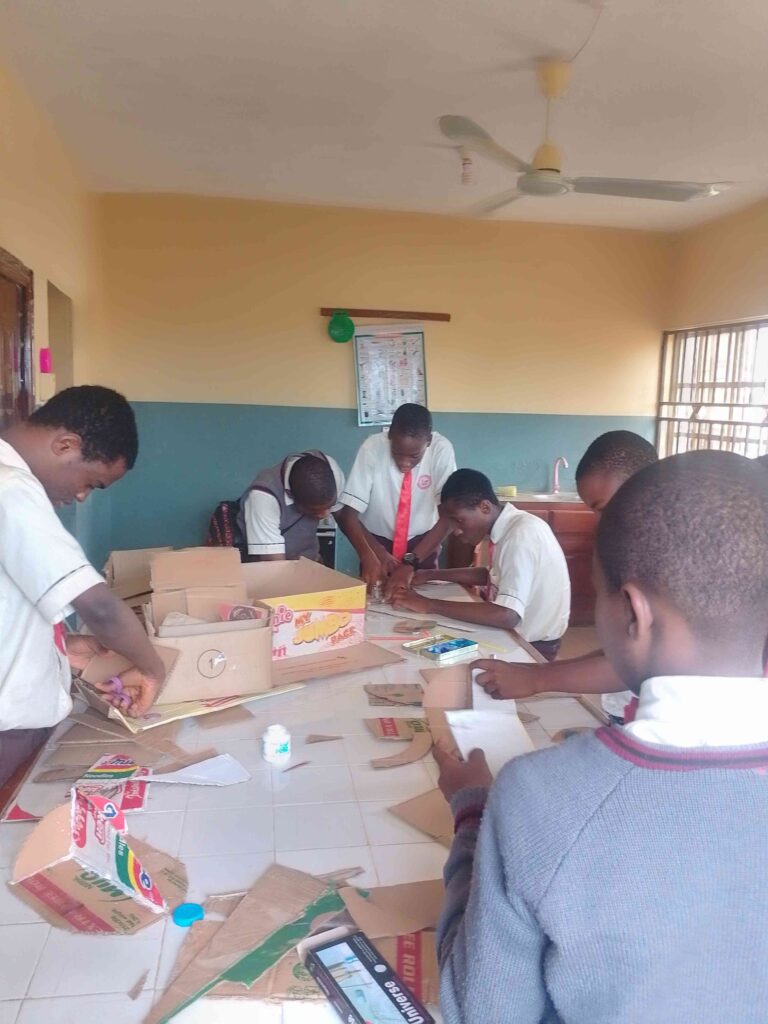
Against this backdrop, Green Growth Africa in partnership with Pratt and Whitney, and the North America Association for Environmental Education (NAAEE) is empowering a 7-student team at Fruitful Vines College, Nigeria focused on building an aircraft powered by solar-charged batteries, in line with sustainability in energy and aviation. The student-team, with guidance of coordinating teachers and a technical advisor, are building the aircraft using firm aluminum foil, some purchased internal parts and an engine powered by a battery charged by a makeshift solar panel. In the pilot stage, they used cardboard and carton wastes to make a prototype.
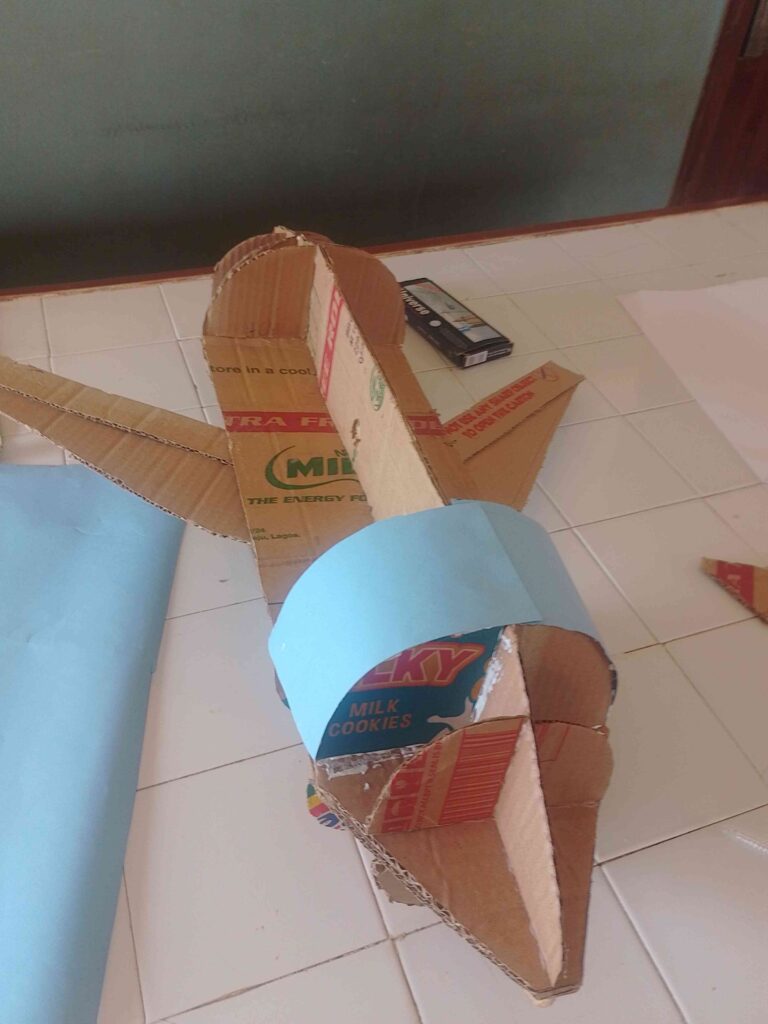
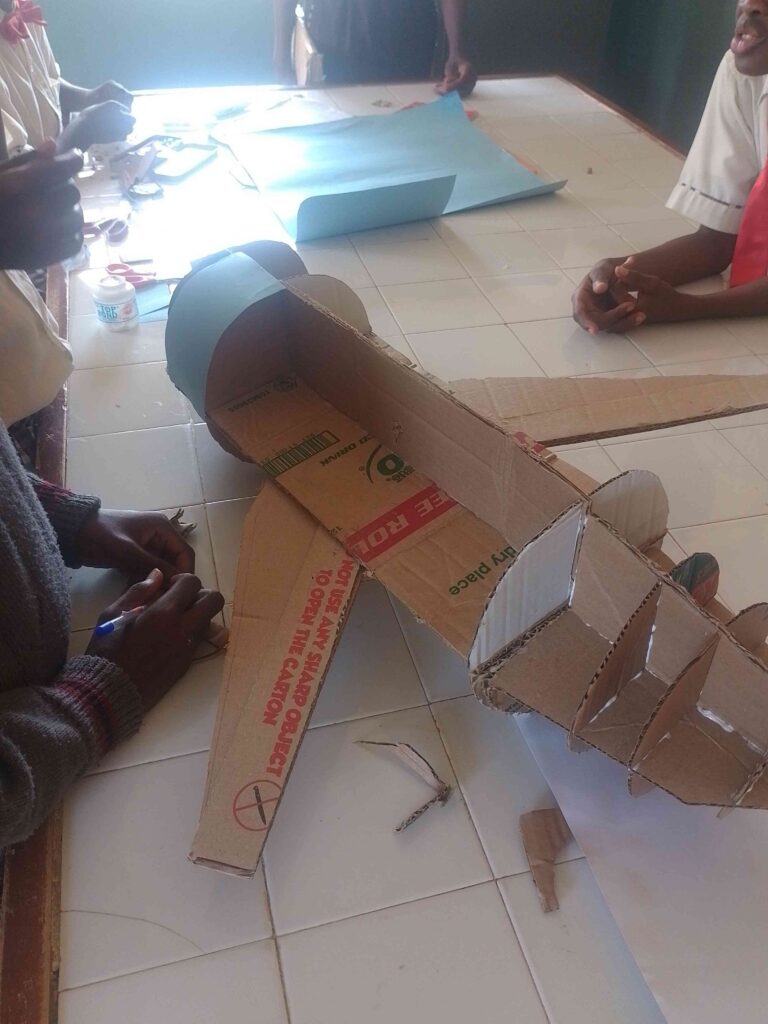
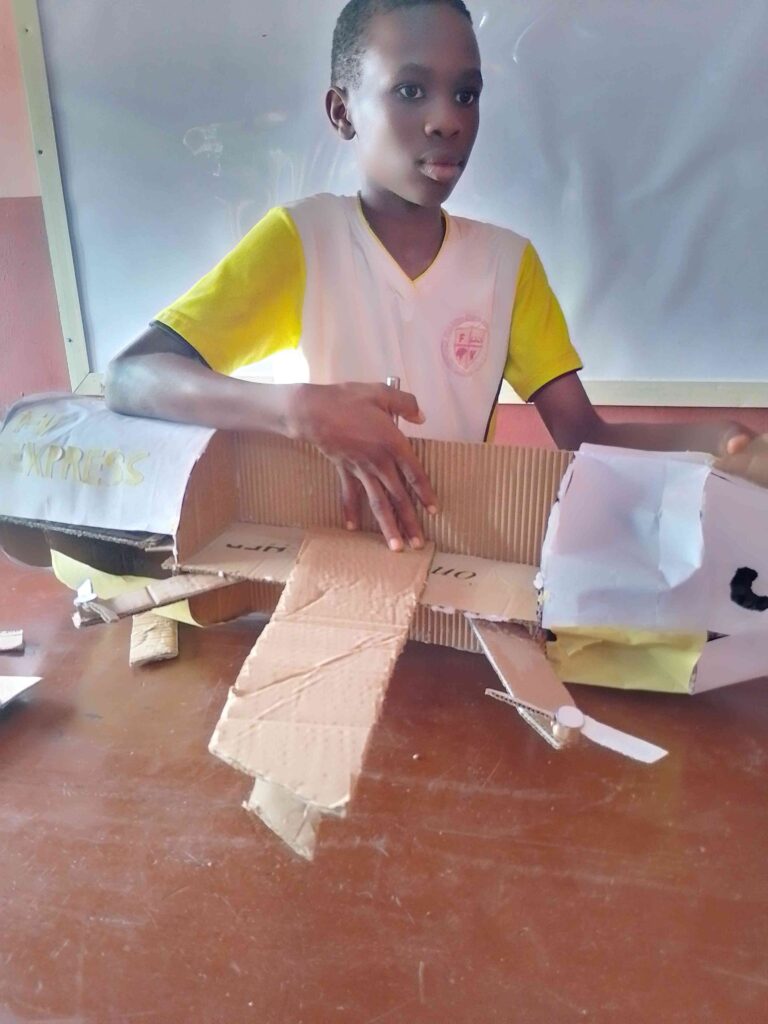
Figures 2,3,4: Prototype of the Aircraft.
This systematic and holistic approach to sustainable aviation encompasses the socioeconomic and environmental dimensions of sustainable development, ensuring that the solution is not only affordable and profitable, but also eco-friendly and efficient.
The solution employs the students’ classroom knowledge in basic physics, mathematics and introductory technology to ideate the wherewithal through which to address climate change and achieve net-zero carbon emissions in the long run.
The students started off with the technical drawings of the aircraft, capturing the different angles as this will serve as a blueprint during the construction stage. After the drawing, the students went further to construct a model, using carton and cardboard materials. The idea of constructing a model was to provide accurate measurements of the body parts of the aircraft, to identify any challenges that might be encountered whilst building the aircraft, and how to overcome these challenges.
Although the construction of the aircraft has just begun, the students estimate that this project will eliminate the use of fossil fuels, reduce carbon imprints and overall carbon emissions by 80%.
Reported by: Ekeh Faith
Blog developed by: Princess Ewa

