
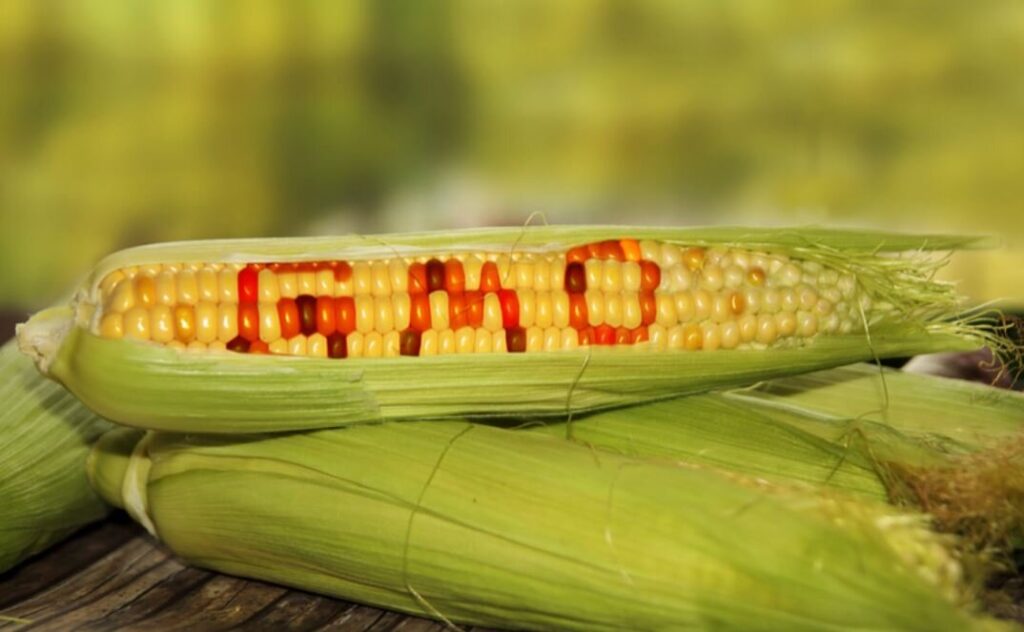
Source: Environmental Consortium
About 19 million Nigerians suffered from extreme food insecurity in 2024. To catch a better picture, that is the equivalent of the entire population of the European country that owns Shell Corp, Netherlands. All going to bed hungry. With the saddening rates of food insecurity in Nigeria, the question of whether genetically modified organisms (GMOs) are a solution or a threat has become increasingly urgent. The issue is not just about science; it is also about history, politics, and concerns over sovereignty and consumer rights. In this blog, we explore the meaning of GMO, why there’s much distrust in it and the path Nigeria chooses to take.
Key Highlights
- What are GMOs?
- Why the Distrust Runs Deep
- Divided Paths Forward
What Are GMOs ?
Before weighing their potential as a solution, we must first ask: what exactly are genetically modified organisms? Genetically modified organisms (GMOs) are organisms (i.e. plants, animals or microorganisms) in which the genetic material (DNA) has been altered in a way that does not occur naturally by mating and/or natural recombination. These Genetically modified organisms have their DNA’s deliberately altered to introduce some traits such as pest resistance, drought tolerance, or higher yields.
Globally, GMOs are widely used in countries like the United States, Brazil, and China, where more than two decades of research have found no conclusive link between GMOs and health risks. Some GMOs are even being developed locally by Nigerian scientists, which challenges the perception that biotechnology is purely a foreign agenda. Still, public skepticism persists, showing a clear gap between scientific consensus and societal trust.
Why the Distrust Runs Deep
The roots of GMO skepticism in Nigeria lie in history. A legacy of colonial exploitation and controversial medical interventions has left many people wary of foreign technologies. This distrust extends to fears that GMOs could be another avenue for external control or corporate dominance. The absence of transparency and the lack of mandatory labeling only deepen concerns, leaving consumers without the information they need to make informed choices.
Divided Paths Forward
The way forward remains contested. One position is to reject GMOs until regulations are clear, risks are fully addressed, and consumer protections are guaranteed. Another is outright opposition, arguing that GMOs will only hand control of Nigeria’s food system to multinational corporations. On the other side, there is strong support for adoption, provided it comes with transparent labeling, strict regulation, and simultaneous reforms across the agricultural sector.
Conclusion
The debate over GMOs in Nigeria goes far beyond science. It is a mirror of the country’s history, a test of its governance, and a reflection of the public’s right to make informed choices about what they eat. GMOs may well play a role in strengthening food production, but without transparency, regulation, and infrastructural reforms, they cannot be a silver bullet.
Ultimately, Nigeria’s decision on GMOs must balance scientific evidence with political will, ethical responsibility, and the urgent need for food sovereignty.
Written by: Glory Akenu; Comms Associate, Green Growth TV
This blog is adapted from Green Growth TV’s Policy on the Go Episode 15; with Toni Ogunbanjo of Green Growth TV and Sa’adatu Umar Ibrahim, Sustainability Advocate and Green Blogger, Wilson Idzi, Agriculture Expert on Dairy Farming and Agricultural Extension, and Uchenna Kenneth, Manager AO2 Agro Supplies, that premiered on July 30th, 2025. Watch the full episode here!

